


59 AD Pompeii Amphitheatre brawl
A violent riot broke out between the residents of Pompeii and neighboring Nuceria during a gladiatorial show. Casualties: While the exact number of deaths is not specified in surviving texts, the incident was severe enough that the Roman Senate banned all games at the venue for ten years. Cause: The tragedy was a “bloody brawl” triggered by mutual taunting between rival fan groups, leading to a massive fight inside the arena
The amphitheatre riot of AD59
In the inscription, which completes the information of Tacitus, it refers for the first time to the exile that would hit even the two top magistrates in office, the duoviri of the city.
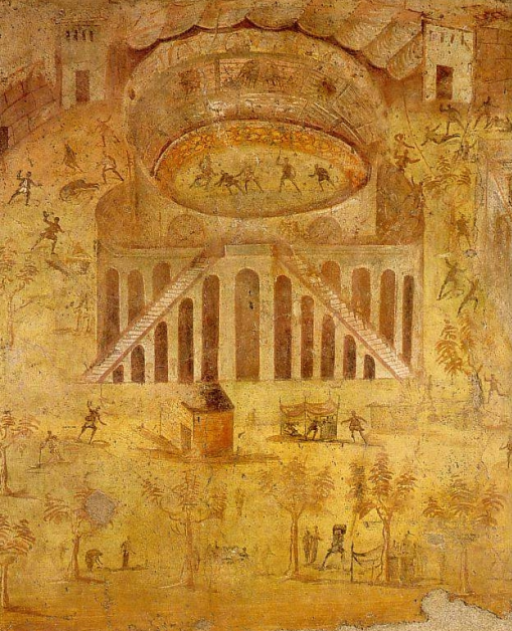
Fresco Showing the Riot of 59 CE in the Amphitheatre of Pompeii
Fourth Style fresco depicting a riot that broke out in Pompeii in 59 CE during games held in the arena involving Pompeians and inhabitants of Nuceria. On the orders of Nero, this event led to the closure of the amphitheatre for ten years.
The Amphitheater of Pompeii Fresco
The fresco above, today on display in the National Archaeological Museum in Naples, shows the Amphitheater of Naples with scenes of street violence and mayhem.1 In this case we are quite lucky because this exact incident, a riot in 59 A.D. between the Pompeians and the residents of Nuceria, is described by the historian Tacitus:
Riot in Pompeii – 59 A.D
Preceding the riot, Nucerians travelled to Pompeii to view the games out of a shared intrigue for combat and manly courage. This is not an unusual practice – many would want to cross the treacherous Tiber and the Alps just to see my performances in the arena. However, in this instance, it turned out to be deadly.
Pompeian Elogium, Livineius Regulus, and the Riots of AD 59
Abstract – The article discusses the identity of the individual honoured with the funerary monument rediscovered in 2017 near the Porta di Stabia in Pompeii, together with the text of the elogium found on the tomb. The analysis of the elogium content – presented against the background of the riots in AD 59 and the wider context of the Campanian munera as such – facilitates the identification of the Pompeian benefactor as Livineius Regulus, a man who sponsored the ill-fated show that year. The circumstances of Livineius Regulus’ involvement in the riots and his later exile shall be examined and juxtaposed with the textual intricacies of the elogium, suggesting that the partial pardon granted by the Emperor Nero may have turned the disgraced senator’s career around. A reading of the elogium confirms that, despite the tumultuous circumstances surrounding the ten-year ban imposed on the organisation of gladiatorial shows by the Pompeians following the riots, the city of Pompeii was most likely able to have their punishment revoked. The details in the text of the elogium take into account the significance of owning a gladiatorial familia, the exile of fighters from Pompeii, and finally, their successful return. The latter, presented in the elogium as a crucial but symbolic element in the benefactor’s life, communicated both the reinstatement of his own gladiators in Pompeii and, more importantly, his re-established status within the city’s local elite. Keywords: ancient Pompeii, elogium, Pompeian riots, Livineius Regulus.
Epigraphic Evidence for the Acclamationes of Pompeian Spectators
“Around the same time, from trivial beginnings arose a vicious bloodbath between the colonists of Nuceria and of Pompeii, at a gladiatorial spectacle produced by Livineius Regulus – whose expulsion from the senate I have already related. Abusing each other with typically parochial petulance, they resorted to insults, then rocks, and finally swords. The Pompeian mob was stronger – the spectacle was being staged there. As a result, many of the people of Nuceria were carried to Rome, their bodies badly mutilated by wounds, and very many mourned the loss of children or parents. The emperor (Nero) entrusted judgement of the case to the senate, and the senate delegated it to the consuls. When the matter was brought before the senate a second time, the Pompeians were banned from public gatherings of that sort for ten years, and the associations that they had set up illegally were disbanded. Livineius was punished with exile, as were others who had incited the riot.”1