


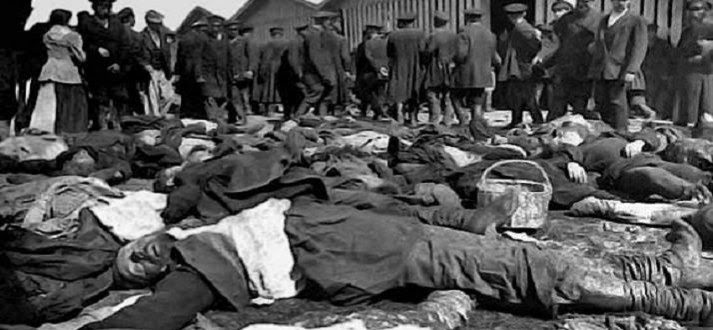
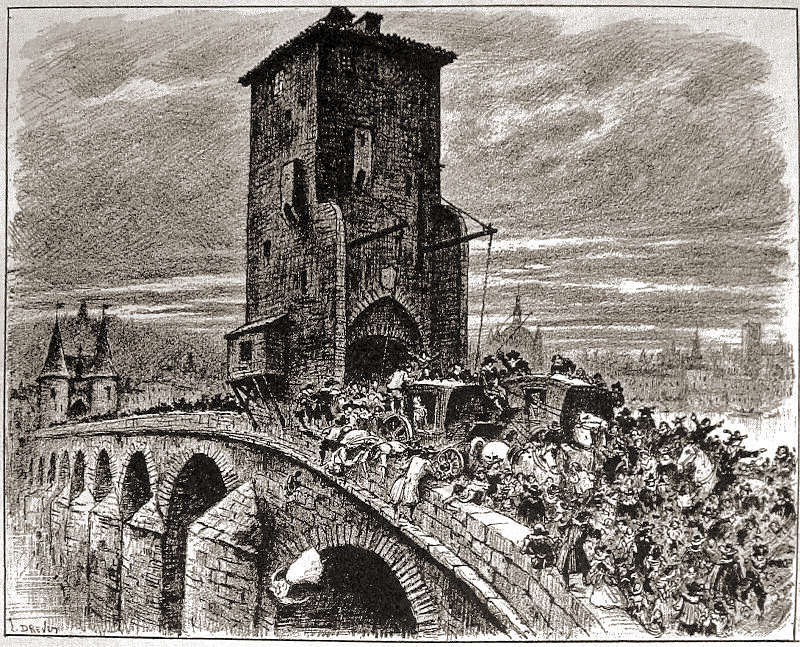
Celebration of the Coronation of Czar Nicholas II Results in the Death of up to 3,000 peasants
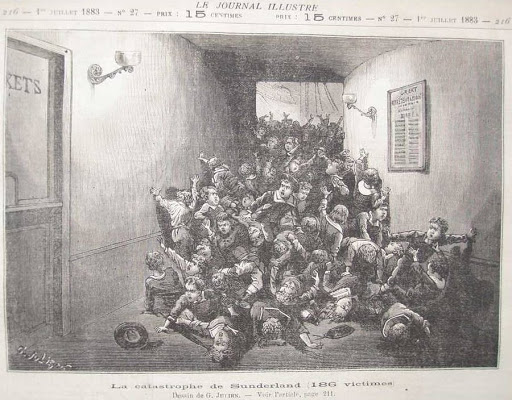
183 children – 114 boys and 69 girls – mostly between the ages of seven and ten but some as young as three died, while a further 100 were seriously injured.
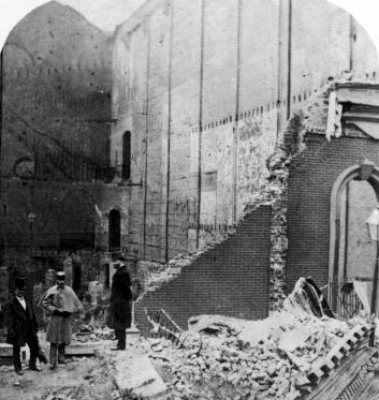
The Brooklyn Theater Fire was a catastrophic theatre fire that broke out on the evening of December 5, 1876 in the city of Brooklyn, New York, United States
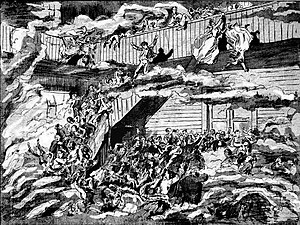
In the sixty-three years and change between The Richmond Theater Fire and the fire at Precious Blood Catholic Church, in Holyoke, Massachusetts America learned how to have man-made disasters. It wasn’t something we wanted to learn how to do by any means, but the Mid-Nineteenth Century’s run-away advances in transportation really didn’t give us much choice in the matter. While the steam engine shortened epic journeys of days or weeks into trips of a few hours by train or a couple of days by steamboat it also brought with it new and horrific ways to kill dozens of people at a time if something went wrong. And, sadly, back in the day things regularly went wrong. Steamboats could collide, sink, their boilers could explode, and they could burn. Trains could collide, derail, run off of bridges, have bridges collapse out from under them…and they could burn.
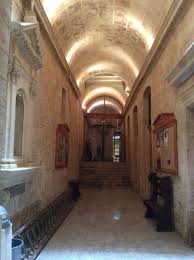
At the time of the tragedy, Malta was under British rule and experiencing a famine, and it had become a tradition to gather 8- to 15-year-old boys from the lower classes of Valletta and the Three Cities to participate in a procession during the last few days of carnival. After the procession, they would attend Mass, and they would be given some bread afterwards.This activity was arranged by ecclesiastical directors who taught catechism, and its main aim was to keep children out of the riots and confusion of carnival.
This activity was organized on 10 February 1823, when children attended mass at Floriana and then went to the Convent of the Minori Osservanti (now better known as ta’ Ġieżu) in Valletta where they were given bread. Everything went as planned, and the same procedure was planned for the following day
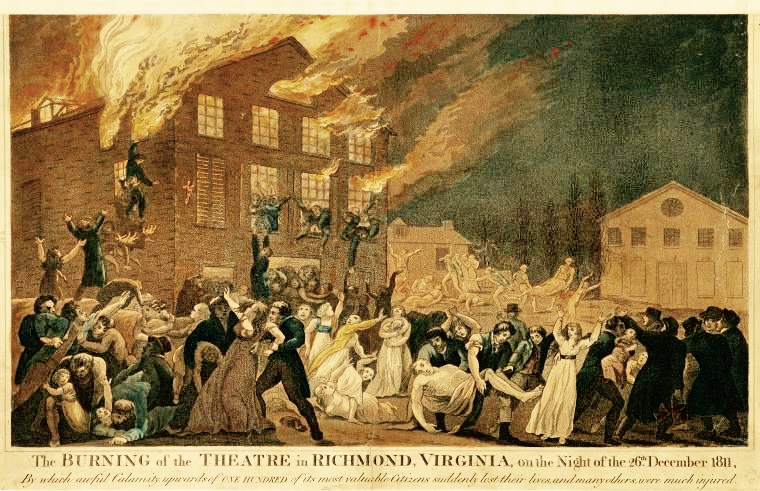
The Richmond Theater fire occurred in Richmond, Virginia, United States on Thursday, December 26, 1811. It devastated the Richmond Theater, located on the north side of Broad Street between what is now Twelfth and College Streets. The fire, which killed 72 people including many government officials, was the worst urban disaster in American history at the time. The Monumental Church was erected on the site as a memorial to the fire
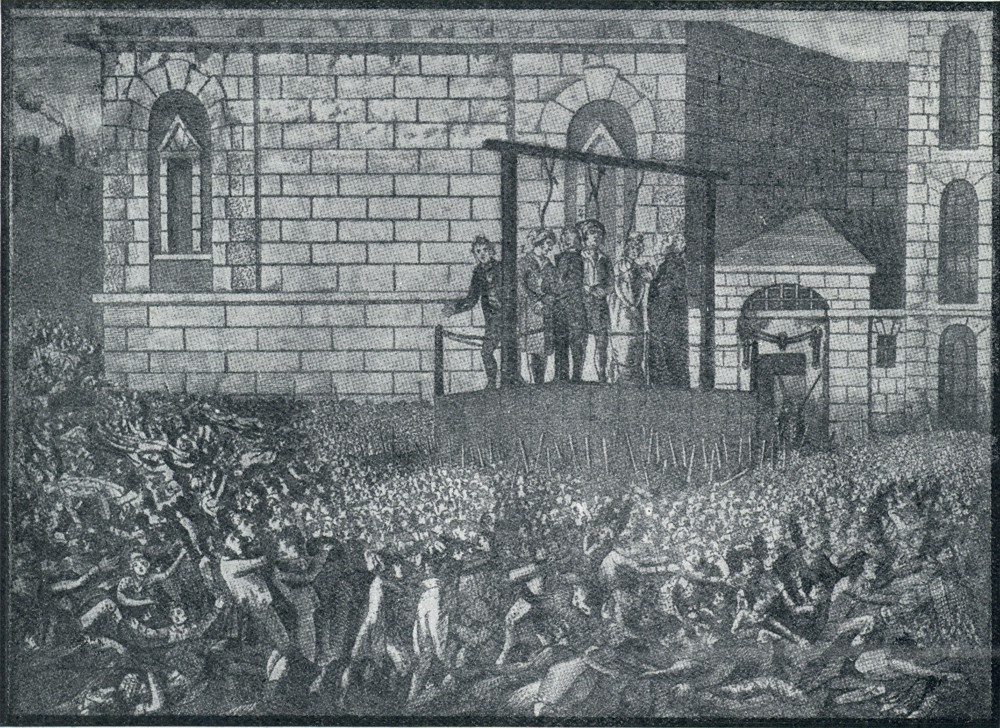
A crowd of around 40,000 had gathered in front of Newgate Prison near the Old Bailey on the morning of 23 February 1807 to witness Holloway and Haggerty’s execution.People from as far as Hounslow and Bagshot came to observe the sentences be carried out, clambering onto carts, lampposts, and window ledges to spectate. “Not only the space in front of the Old Bailey, but all the windows and the tops of houses adjoining, were crowded with spectators, and the avenues to the remotest point…” The crowd had been so thick at the north side of the Old Bailey that its movements were compared to ocean waves
John Holloway further excited the crowd by proclaiming en route to the scaffold “Gentlemen, I am quite innocent of this affair. I never was with Hanfield, nor do I know the spot. I will kneel and swear it.” Around 08:06-08:08 the executioner pulled the lever and the hatch beneath Holloway, Haggerty, and Godfrey was dropped. The overheated, impatient spectators surged forward towards the scaffolding to obtain better views of the executions. Observers from the corner of Green Arbor Lane were suddenly startled when the axletree of a wooden cart overloaded with people broke, collapsing the cart and knocking those on top of it to the ground. Subsequently, a pieman a few yards away dropped a large basket of merchandise in the uproar, falling while attempting to pick it up and then tripping others who were then trampled with him
When the wooden cart collapsed, the spectators who had fallen off of it were crushed to death as the people behind the cart pushed forward to climb on top (either to watch the executions or escape the stampede). The pressurised crowd pushed back against the cart, causing yet more carnage and possibly tripping the pieman who was just yards away. These dual-accidents startling the disorganised crowd on the relatively narrow street resulted in dozens of people being killed and many others being injured.The scene lasted for over an hour as individuals slowly cleared out from the area, with a significant portion of the crowd remaining long after the executions were carried out. Once authorities had cleared out the remaining spectators there seemed to be around 100 injured or dead individuals lying in the street in front of Newgate Prison. Newspapers reported on death tolls between 20 and 30, but one contemporary account describes 34 dead and at least 15 serious injuries. The injured were taken to St Bartholomew’s Hospital.
en.wikipedia.org

The following is an extract from the Parish Registers of Burwell:
“At about 9 o’clock on the evening of September 8th 1727, fire broke out in a barn, in which a great number of persons were met together to see a puppet show. In the barn were a great many loads of new light straw. The barn was thatched with straw which was very dry, and the inner roof was covered with old dry cobwebs, so that the fire like lightening flew around the barn in an instant. There was but one small door, which was close nailed up, and could not easily be broken down. When it was opened, the passage was so narrow and everybody so impatient to escape that the door was presently blocked up, and most of those that did escape, which was but very few, were forced to crawl over the bodies of those that lay in a heap by the door.”
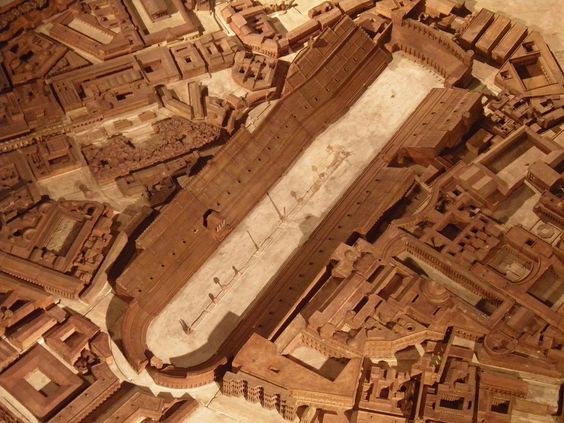
Circus Maximus partial stadium collapse. 140 AD – Rome, Italy. The Circus featured seating for 250,000 – five times that of the colosseum, and later additions increased seating to more than 270,000. The lower tiers (for the upper class) were made of stone and marble, and the upper tiers (for the less affluent) were wooden. In 140 AD the wooden upper tier partially collapsed killing over 1,000 people, and although there is no extant account it is considered the worst sporting disaster in history.
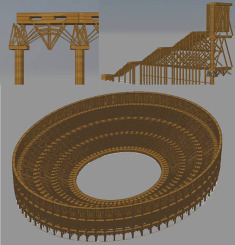
In 27 AD, an apparently cheaply built wooden amphitheater constructed by an entrepreneur named Atilius collapsed in Fidenae, resulting in by far the worst stadium disaster in history. At least 20,000 were killed and many more injured out of the total audience of 50,000.
The emperor Tiberius had banned gladiatorial games, it seems, and when the prohibition was lifted, the public had flocked to the earliest events, so a large crowd was present when the stadium collapsed. At the time of the incident, Tiberius was in Capri, where he had a secure getaway, but rushed to Fidenae to assist the victims of this incident.
The Roman Senate responded to the tragedy by banning people with a fortune of less than 400,000 sesterces from hosting gladiator shows, and also requiring that all amphitheaters built in the future be erected on a sound foundation, inspected and certified for soundness. The government also “banished” Atilius.